
On a humid afternoon in Pune, a young software engineer sat hunched over his laptop, sketching out what looked like a small side project. The idea was simple: a tool that could help businesses create ad creatives without paying for an expensive agency. That project became Predis.ai, a micro SaaS startup that would grow far beyond its modest beginnings.
By focusing on one very specific problem—social media content creation—Predis built a paying customer base, secured partnerships with Shopify, and crossed ₹4.5 crore in annual revenue within just four years. The company didn’t rely on splashy ad campaigns or a giant team. Instead, it leaned on careful validation, word-of-mouth growth, and clever distribution channels like AppSumo.
Stories like this reveal something important: the most exciting wave in software today isn’t coming only from Silicon Valley unicorns. It’s coming from small, micro SaaS startups that are rewriting the rules of digital entrepreneurship.
What Exactly Is a Micro SaaS Startup?
Think of a micro SaaS as the opposite of “big tech.” These startups are lean, often built by a single founder or a team you could count on one hand. Their products usually serve niche audiences—Shopify sellers, YouTube creators, independent designers—and the business runs on recurring subscriptions rather than complex sales pipelines.
This is a model built for focus and sustainability. Unlike traditional SaaS companies that aim to capture vast markets, micro SaaS thrives by going deep instead of wide. As Market Fit AI notes, testing small assumptions quickly allows these startups to grow without wasting time or money.
Case Study: Base44 and the Power of Building in Public
One of the most talked-about examples is Base44, a one-man operation that let users create apps simply by describing them in natural language. The founder didn’t have a flashy office or a marketing budget. What he did have was a community.
By sharing progress openly on Twitter, taking feedback in real time, and iterating quickly, Base44 grew to more than 100,000 users in under a year. In 2025, Wix acquired the company for a reported $80 million.
It’s a textbook illustration of what a micro SaaS startup can achieve: scale fast, stay lean, and exit smart—without needing a big team or a Silicon Valley address.
The Lean Playbook
Why are these businesses succeeding? Much of it comes down to lean execution. Instead of overbuilding, micro SaaS founders:
- Use no-code platforms like Webflow or Bubble to launch prototypes in days.
- Test demand through simple landing pages or “fake door” campaigns before writing a line of code.
- Grow through organic channels like Product Hunt launches or community groups instead of expensive ad campaigns.
This approach isn’t new Buffer famously validated its idea with a two-page site before coding anything—but it has become the standard operating procedure for today’s micro SaaS founders.
When the Business Model Is the Innovation
Some startups aren’t innovating on features at all, but on how the service is packaged. Awesomic, for example, reimagined design services as a subscription. For a flat monthly fee, businesses could request unlimited design tasks no hourly billing, no endless negotiations.
That clarity made Awesomic a favorite among startups that needed fast design but couldn’t afford agencies. By 2025, the platform had completed more than 10,000 projects for 1,500 clients worldwide.
This model highlights another advantage of the micro SaaS startup: the freedom to experiment with pricing and delivery in ways big companies rarely can.
Why Creators Are Driving the Boom
The surge in the creator economy has given micro SaaS a new playground. Influencers, podcasters, and small e-commerce sellers all need tools customized for their workflows.
Predis.ai tapped into this by automating content creation. Other startups are doing the same with analytics dashboards for YouTubers or scheduling assistants for Instagram creators. The beauty of these products lies in their focus large SaaS companies chase big enterprise clients, but creators need small, affordable, highly tailored tools.
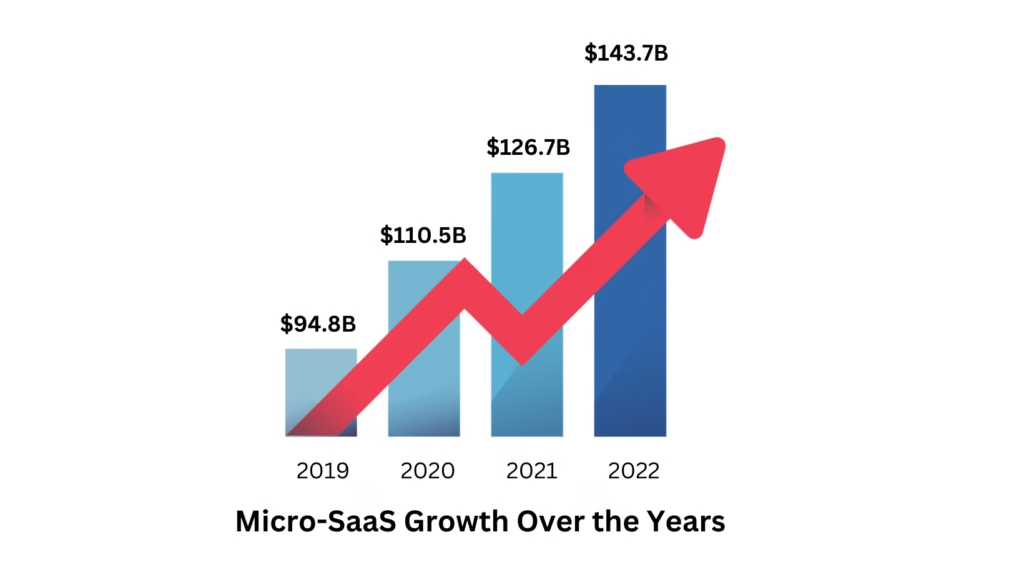
This alignment between niche problems and targeted solutions explains why micro SaaS is flourishing now more than ever.
The Risks of Staying Small
Of course, there are challenges. Micro SaaS startups can struggle with:
- Customer churn eating into small revenue bases.
- Larger players copying features.
- Markets that feel big at first but plateau quickly.
Yet the advantage of staying small is speed. Founders can pivot, update, or refocus in weeks rather than months. As YourStory points out, startups that stay close to their customers often outmaneuver bigger rivals despite having fewer resources.
Lessons for Aspiring Founders
For anyone dreaming of building a micro SaaS startup, the stories of Predis, Base44, and Awesomic offer a clear blueprint:
- Start with a sharp problem—the narrower, the better.
- Validate before building—whether it’s a waitlist, a beta test, or a fake door landing page.
- Lean on distribution platforms like AppSumo, Product Hunt, or Shopify to reach customers early.
- Keep it simple—solve one problem really well before chasing add-ons.
- Prioritize recurring revenue—subscriptions compound, even at small price points.
Final Word
The rise of micro SaaS startups is more than just a business trend—it’s a cultural shift. It shows that entrepreneurship no longer requires a massive team or a Silicon Valley venture round. With a laptop, a smart idea, and the discipline to stay lean, anyone can build software that reaches thousands or even millions of users worldwide.
And that may be the most exciting part: the next big success story might not be a billion-dollar unicorn. It could be a micro SaaS startup built by someone like you, working late at a kitchen table, solving one problem brilliantly.