Introduction
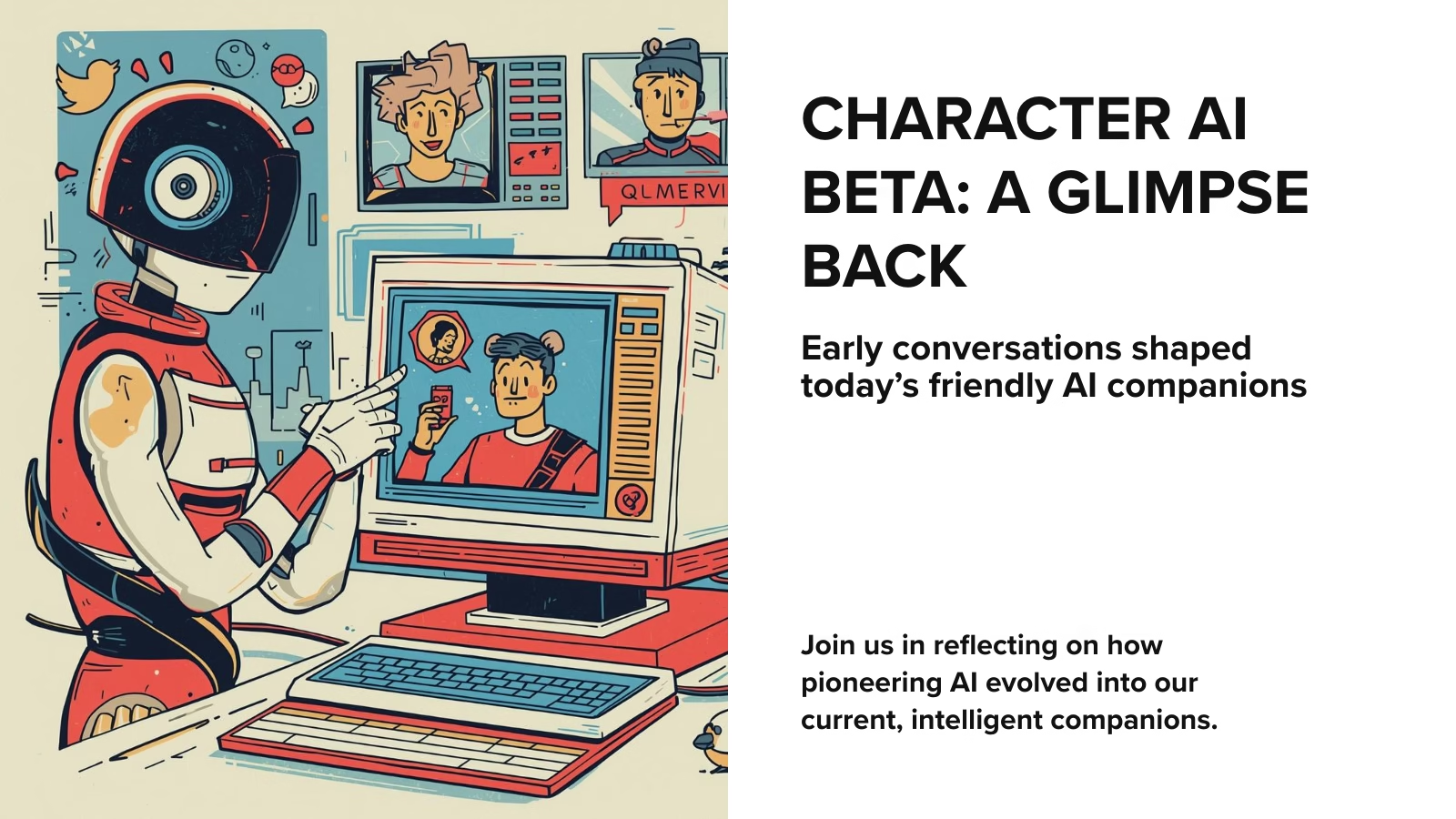
Artificial Intelligence has grown rapidly, but few projects have captured user imagination like Character AI Beta. When it first appeared, it felt less like a technical demo and more like an invitation into a new world where you could talk to AI as if it were a friend, a mentor, or even a fictional hero. Though the beta phase is now over, the legacy it left behind still shapes how we interact with AI today.
If you’re curious about how the older versions worked and why they retired, you can also check out this full guide to the old Character AI.
What Was Character AI Beta?
Character AI Beta was the first public version of the now widely popular Character.AI platform. It was built by former Google engineers who had also worked on Google’s advanced conversation model, LaMDA. Unlike traditional chatbots that stuck to functional answers, the beta was designed to mimic personalities.
Users could create their own characters, give them backstories, and then interact with them as though they were real. Imagine chatting with a historical figure like Albert Einstein, role-playing with a favorite anime character, or even designing a completely new personality just for fun. That creative freedom was what made the beta stand out.
The community quickly embraced it. Within weeks, people were sharing their AI creations online, testing the limits of what conversational AI could do. It wasn’t perfect responses could sometimes be strange or inconsistent but the excitement was undeniable.
The Transition from Beta to Full Release
The beta version wasn’t just a trial run—it was a learning stage for both developers and users. Every conversation, every piece of feedback, and every experiment helped shape what the final platform would become.
Some of the features introduced later, like memory, group chats, and voice options, were direct results of what users wanted during the beta days. People asked for characters that could “remember” past conversations, for example, and eventually that feature became central to Character.AI’s evolution.
The beta phase officially ended when the platform moved into its full release in late 2024. By then, millions of people had tried it, and the company had secured significant funding to keep improving. The retirement of the beta wasn’t the end it was more like a graduation.
Why People Still Talk About Character AI Beta
Even though the beta is long gone, it remains a point of nostalgia for many users. There are three main reasons why people still search for it today:
- The sense of discovery – Early adopters remember the thrill of creating characters when the concept was still brand-new.
- Community creativity – The beta was open enough that users often collaborated, sharing characters and experimenting with role-plays.
- Simplicity – The early design was less crowded with features, which some found more enjoyable than the later, more complex version.
For many, Character AI Beta wasn’t just an app; it was their first experience of AI that felt humanlike.
Challenges During the Beta Stage
Of course, the beta wasn’t without problems. Some of the biggest issues included:
- Inaccurate or odd replies – Because the AI was still in its early form, conversations could quickly lose coherence.
- Content moderation – Users sometimes pushed the AI into uncomfortable or unsafe topics, which sparked debates about responsibility and ethics.
- Emotional reliance – Some people started using the AI as a substitute for real human connection, raising concerns about mental well-being.
These issues forced the developers to refine their policies, add filters, and eventually bring in features that would keep conversations safer and more balanced.
The Legacy of Character AI Beta
Looking back, the beta was never meant to be permanent. It was a sandbox, a place where users and developers could explore together. But its importance can’t be overstated:
- It proved that people wanted AI companions for more than just utility.
- It laid the foundation for today’s customizable AI personalities.
- It showed how user communities can shape product development in real time.
In many ways, the beta version was less about the technology itself and more about the experience of interaction. It revealed something powerful: people don’t just want answers they want conversations.
Lessons Learned from the Beta
From a broader perspective, the beta highlighted some crucial lessons for AI development:
- User creativity drives adoption – The ability to create and share characters kept users coming back.
- Ethics can’t be an afterthought – Without safeguards, AI companions can lead to misuse or unintended harm.
- Feedback loops are vital – The platform grew stronger by directly listening to what users loved or struggled with.
These lessons continue to influence not only Character.AI but also other AI platforms being developed today.
What Comes After Beta?
Today’s Character.AI is far more advanced than the beta version, with features like voice interaction, memory, and even experimental visual tools. Yet, many users still long for the simplicity and raw experimentation of the beta.
Future updates may bring back some of that feel, lighter interfaces, more community-driven events, or even nostalgic “beta-style” modes. After all, technology often cycles back to its roots when users ask for it.
Conclusion
Character AI Beta may officially be history, but its spirit is alive in every new update and feature the platform rolls out today. For those who were there in the early days, it will always represent the moment when AI companions shifted from being a futuristic idea to a real, interactive experience.
If you want to dive deeper into how the older version worked and why it mattered, check out this complete guide on the old Character AI.
The beta might be gone, but it left behind something much bigger: a reminder that AI can be more than code. It can be creative, social, and even a little human.