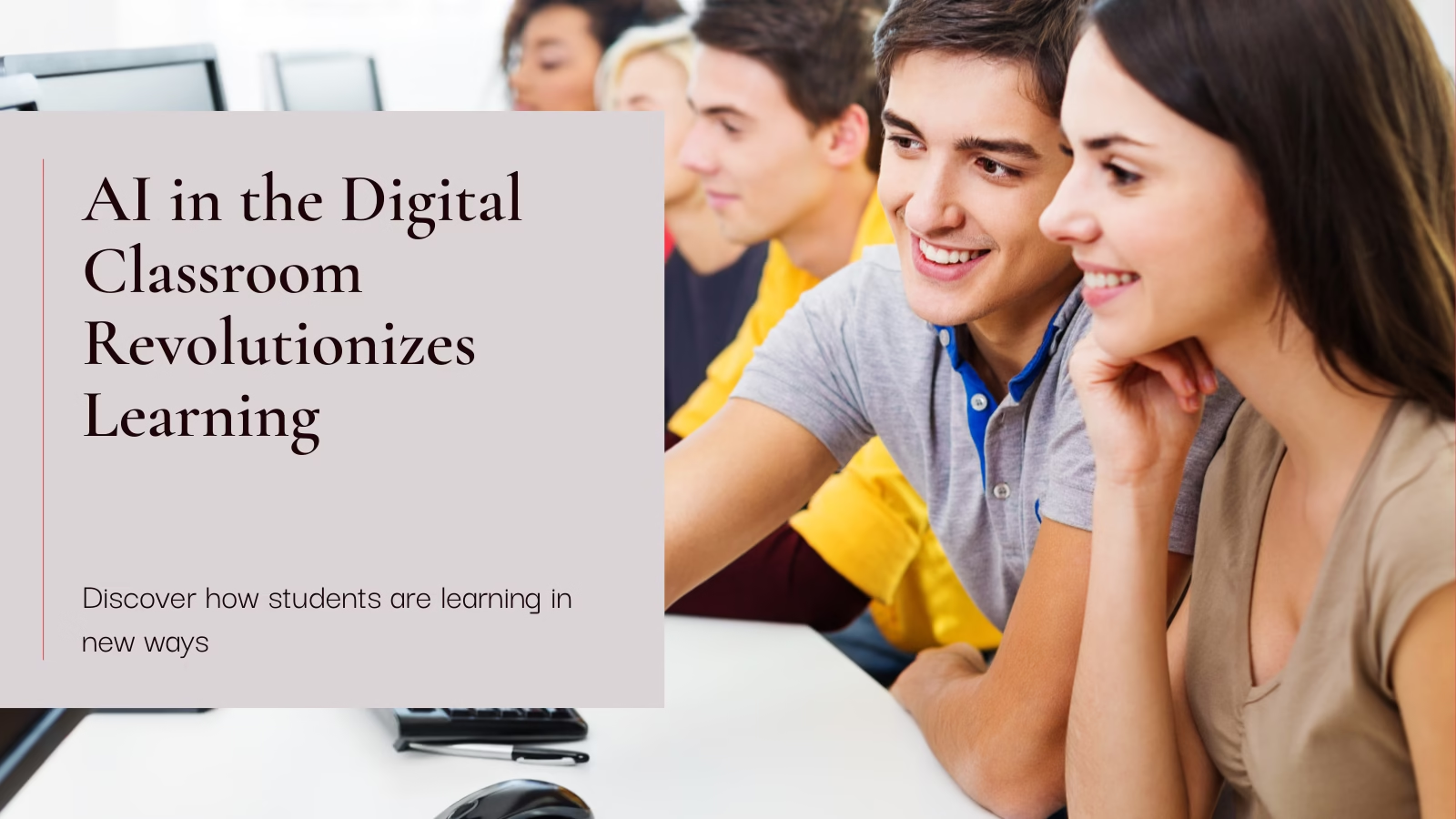
The digital classroom is no longer just a backup plan for emergencies it has become a core part of education worldwide. With the rise of artificial intelligence (AI), online learning platforms are smarter, more personal, and more flexible than ever before. But what does this actually mean for students? And how does it change the way teachers teach?
Let’s take a closer look at how AI is shaping digital classrooms today, with real stories from students who are already living this change.
Why AI Matters in Digital Classrooms
Artificial intelligence is quietly becoming the backbone of modern education. Instead of one-size-fits-all lessons, AI tools can adjust to a student’s pace, give instant feedback, and suggest personalized resources.
Platforms like Google Classroom and Microsoft Teams for Education are already using AI to track performance and recommend improvements. A World Economic Forum report predicts that automated systems could take over up to 40% of repetitive teaching tasks, allowing teachers to focus more on mentoring and less on paperwork.
For students, this means more guidance, more flexibility, and less stress from falling behind.
Tools Powering the AI-Driven Digital Classroom
Several platforms are leading the way in merging AI with digital learning. Here are some of the most impactful:
1. Google Classroom
Google Classroom has become a global standard for digital learning. With AI-powered grading suggestions, plagiarism detection, and integration with Google Meet, it helps teachers manage classrooms smoothly. Students benefit from personalized recommendations on assignments and real-time feedback.
2. Microsoft Teams for Education
Microsoft has built a strong ecosystem for education. Its AI-driven Reading Progress tool tracks student fluency, while Immersive Reader supports students with learning difficulties or language barriers. Teachers can quickly spot areas where students struggle and assign targeted exercises.
3. Coursera and EdX
These global learning platforms use AI to recommend courses, tailor lesson plans, and analyze student progress. For example, Coursera’s AI engine suggests study paths based on performance and interests—helping students like working professionals balance education with busy schedules.
4. Duolingo (for Language Learning)
Though not a traditional “classroom platform,” Duolingo’s AI-driven approach has changed how millions learn languages. Its adaptive system adjusts questions in real time, ensuring students don’t just memorize words but actively retain them.
These platforms show how the digital classroom isn’t one-size-fits-all. Instead, AI creates a tailored experience for each learner.
- Google Classroom → https://classroom.google.com
- Microsoft Teams for Education → https://www.microsoft.com/en-ww/education/products/teams
- Coursera → https://www.coursera.org
- edX → https://www.edx.org
- Duolingo → https://www.duolingo.com
Real Student Experiences
Numbers and reports are useful, but the real proof comes from students themselves. Here are a few stories that show what AI-powered digital classrooms look like in practice.
Ananya Builds Confidence in Math
Ananya, a 14-year-old from Bengaluru, used to struggle with algebra. Her school introduced an AI learning tool that adjusted problems based on her mistakes.
“It felt like the system understood me,” she said. “I could practice at my own speed and not feel embarrassed in front of classmates.”
Six months later, her test scores improved by 25%, and she started helping friends who once outperformed her.
Luis Balances Work and College
Luis, a 21-year-old in Mexico City, works part-time while studying. Managing deadlines was tough until his university integrated an AI-based scheduler into their digital classroom.
“It shows me which assignments are urgent and even suggests shorter study sessions,” he explained.
Now, Luis no longer feels forced to choose between his job and his degree.
Fatima Gains Independence
Fatima, a visually impaired student in Cairo, often relied on others to access learning materials. AI-powered text-to-speech tools changed that.
“For the first time, I can navigate lessons on my own. I don’t feel left behind anymore,” she said.
Her story shows how AI doesn’t just boost performance—it makes learning more inclusive.
Challenges Still Ahead
The digital classroom isn’t perfect. Privacy and data security are major concerns. A UNESCO study found that nearly 70% of schools using AI don’t have clear policies on how student data is stored.
Another issue is the digital divide. Many students, especially in rural areas, still lack high-speed internet or modern devices. Unless these gaps are closed, AI could widen inequalities instead of reducing them.
Teachers also worry about being replaced. But most experts agree: AI is here to support educators, not replace them. Human mentorship, empathy, and creativity remain irreplaceable in the classroom.
What’s Next for Digital Classrooms
The future of education is clearly moving toward AI-supported digital learning. A McKinsey report suggests that personalized learning could cut dropout rates by up to 30% in developing countries.
At the same time, trends like Answer Engine Optimization (AEO) are changing how students interact with information. Instead of browsing long documents, they can ask systems questions and get direct, clear answers. (We’ve covered this shift in detail in our Answer Engine Optimization Guide).
The classroom of the future may not look like four walls and a chalkboard. It will be a hybrid space where physical lessons, virtual platforms, and AI tutors work together.
Final Take
The digital classroom is no longer an experiment it’s a global reality. For Ananya, Luis, and Fatima, AI tools aren’t abstract they’re daily helpers that make learning smoother, fairer, and more personal.
Yes, there are challenges: privacy, accessibility, and equity need serious attention. But the direction is clear. AI isn’t here to remove the human side of education here to make it stronger.
And for millions of students around the world, that shift is already happening.