For decades, menopause was treated as a silent passage — endured rather than discussed, often dismissed by doctors, and rarely covered in mainstream health conversations. Today, that silence is cracking. From online communities to artificial intelligence–powered health tools, a movement is reshaping the way we think about menopause care and women’s health.
In the U.S. alone, 1.3 million women enter menopause every year. Globally, hundreds of millions navigate symptoms that can disrupt work, relationships, and quality of life. Yet, as many women say, the hardest part isn’t the hot flashes or the brain fog. It’s not being believed.
“I Thought I Was Losing My Mind”
On Reddit’s r/Menopause, a 47-year-old woman described waking up drenched in sweat, forgetting simple words, and feeling “like a stranger in my own body.” Her doctor told her it was stress.
Another user wrote: “I had nerve zaps, burning feet, and sudden panic attacks. My husband thought I was having a breakdown. Nobody connected it to menopause.”
These stories are common. In surveys, nearly 75% of women say menopause interferes with daily life, but fewer than 30% receive meaningful medical support. This gap is at the heart of the discussion about menopause care and women’s health today.
Why Menopause Care Has Been Overlooked
Medical research historically prioritized male bodies, leaving women’s health underfunded and under-discussed. A recent New York Post survey found that only one in four women felt their doctor gave them useful menopause guidance.
The consequences go beyond discomfort. Sleep deprivation from night sweats can raise risks of cardiovascular disease. Anxiety and depression tied to hormonal changes often go untreated. Brain fog can affect careers at the very stage many women are in leadership positions.
“Menopause care and women’s health is not just a wellness issue; it’s an economic one,” says Dr. Mary Claire Haver, a physician and author who advocates for better menopause awareness. “When women are unsupported, companies lose experienced workers, families lose stability, and society loses wisdom.”
The Symptoms No One Talks About
Hot flashes and night sweats are the familiar markers. But ask women in online communities and the list expands quickly:
- Sleep disruption (affecting up to 90% of women)
- Brain fog and memory lapses (82%)
- Anxiety and mood swings (60%)
- Joint pain and nerve tingling
- Skin, dental, and vision changes
Reddit forums are filled with women stunned by symptoms they were never warned about. “Nobody told me menopause could cause burning mouth syndrome,” one user confessed. “I spent months thinking I had an infection.”
This lack of preparation highlights why menopause care and women’s health need stronger, evidence-based education.
Where AI Enters the Picture
Artificial intelligence is not a cure. But it’s becoming a lifeline for women who feel unseen by the healthcare system.
- Symptom tracking apps like Clue and Balance use AI to identify patterns between diet, sleep, and symptoms.
- Wearables like Oura Ring provide insight into sleep disruption, one of menopause’s most common and debilitating effects.
- Mental health chatbots offer around-the-clock support for anxiety and mood changes, bridging gaps until therapy or medication is available.
- Education platforms are using AI to personalize content, giving women medically accurate information at the right time.
For many, the value isn’t just data. It’s validation. As one Redditor wrote after trying a symptom-tracking app: “Finally, something that confirms I’m not crazy. There’s a pattern. There’s a reason.”
📊 What Women Actually Face
Data from BMC Public Health and JoinMidi reveals the prevalence of symptoms:
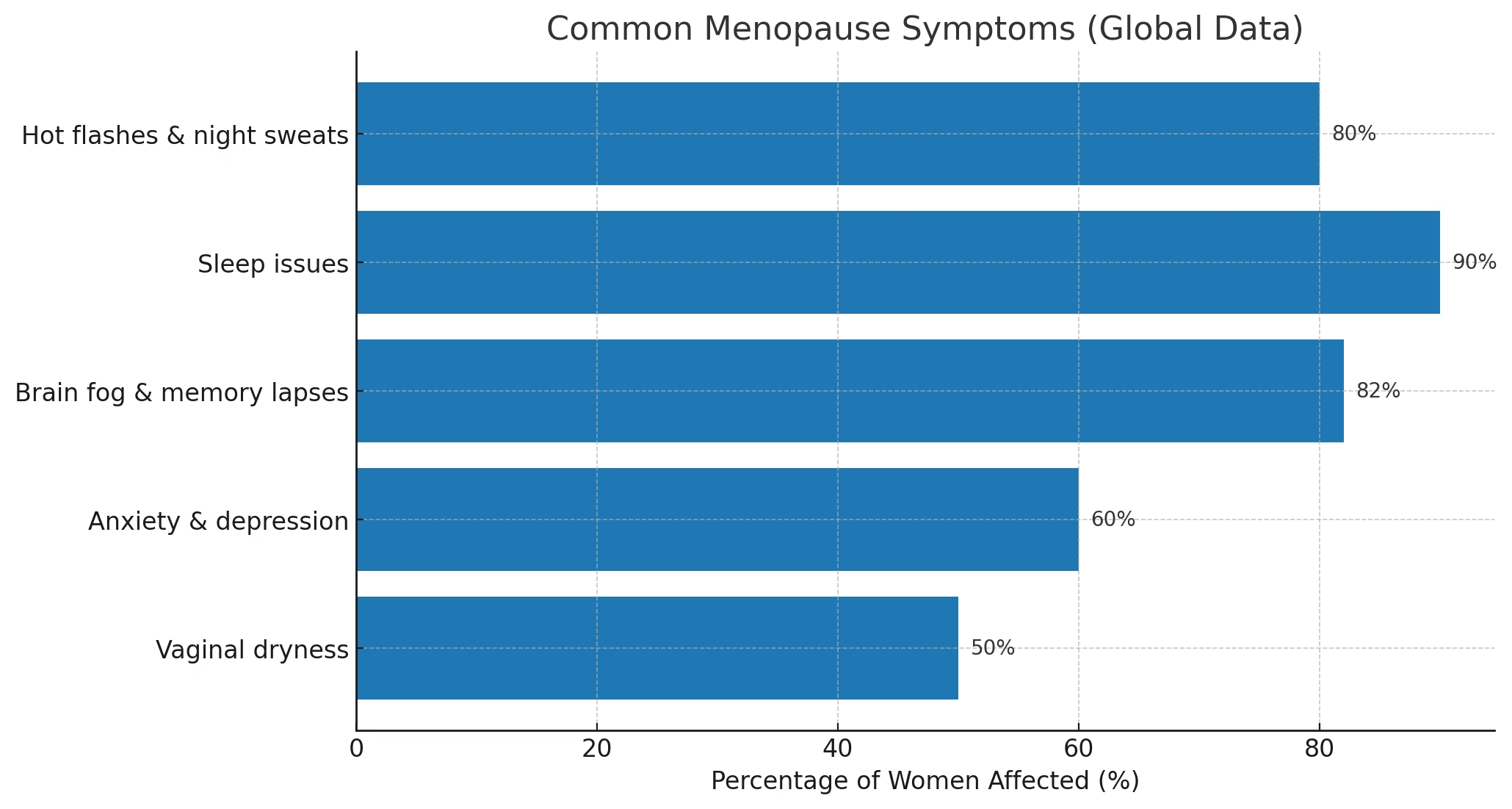
This charted reality is the foundation for why menopause care and women’s health demand investment in both medical training and innovative technology.
Why Empathy Still Matters
No algorithm can replace a compassionate doctor or supportive community. AI may help women organize symptoms, but it cannot provide empathy. And empathy is what so many women say they are missing.
In a Time Magazine feature, two-thirds of women admitted they never even brought menopause up with their doctor. The stigma runs deep. AI can support—but human connection must lead.
What Needs to Change
- Medical training: Doctors should be required to receive specialized menopause education.
- Workplace policies: Employers need to acknowledge menopause as a stage that can impact performance, just as parental leave accounts for pregnancy.
- Technology integration: AI and digital tools should be available in mainstream healthcare, not as niche add-ons.
- Cultural shift: Talking openly about menopause should be as normal as discussing pregnancy or puberty.
Conclusion: A Human Journey, Not Just a Medical Stage
Menopause care and women’s health are finally coming into public view, but there’s a long road ahead. Women shouldn’t have to rely on Reddit threads at 3 a.m. to make sense of their bodies. They deserve well-informed doctors, compassionate care, and tools that empower rather than dismiss.
AI is helping bridge the gap, but it’s only one piece of the puzzle. The real change will come when society listens to women—not as patients to be managed, but as people navigating a profound and universal life stage.
Because menopause is not just a health issue. It’s a human story.
Pingback: AI in Medical Research: A Human Story of Discovery - coreguideai